


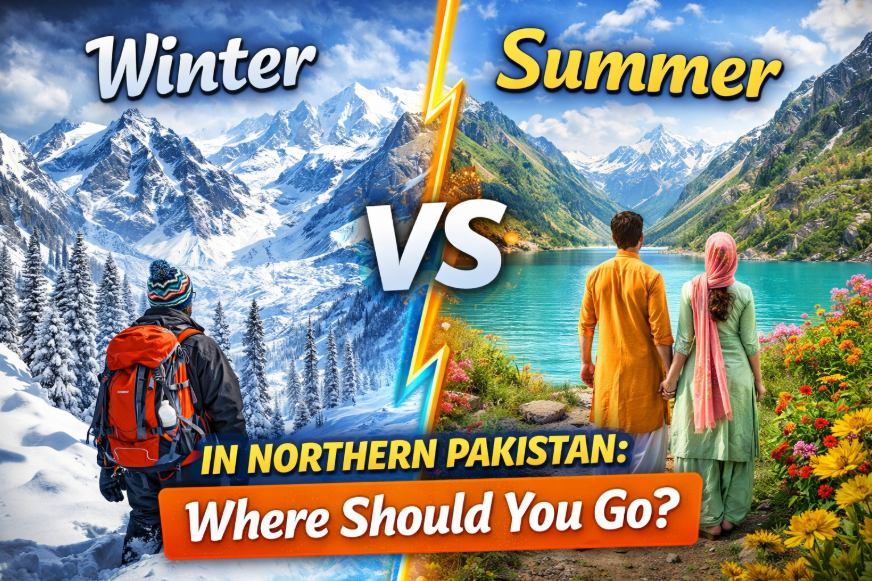
Northern Pakistan is a land of breathtaking contrasts. Towering mountains, crystal-clear lakes, and charming villages make it one of the most spectacular travel destinations in the world. But the experience changes dramatically depending on when you visit. For travellers from the UK, the region offers an especially appealing escape from grey skies and routine city life, replacing it with dramatic landscapes and rich cultural encounters. Whether it’s the summer greenery or the serene, snow-covered winters, British tourists often find Northern Pakistan both refreshing and surprisingly diverse. Choosing between winter and summer in regions like Hunza Valley, Skardu, and Swat Valley can completely shape your journey. So, which season is right for you?
Summer in Northern Pakistan (May to September)
Summer is undoubtedly the most popular time to visit Northern Pakistan—and for good reason.
Perfect Weather & Accessibility
During summer, the snow melts, roads reopen, and the entire region becomes accessible. Places like Khunjerab Pass and Deosai National Park are only open for a few months, making summer your only chance to explore them fully.
Temperatures range between 15°C and 30°C, offering a comfortable escape from the scorching heat of the plains. The lush greenery, blooming flowers, and flowing rivers create postcard-perfect scenery.
Adventure & Outdoor Activities
If you’re someone who loves adventure, summer is your season. Trekking routes near Nanga Parbat and hiking trails in Fairy Meadows are at their best. You can also enjoy:
- Camping under star-filled skies
- Boating in lakes like Attabad Lake
- Jeep safaris across rugged terrains
Bustling Tourist Vibes
Summer brings life to the valleys. Cafés, hotels, and local markets are open and buzzing. Cultural festivals and local events also take place, offering a deeper glimpse into regional traditions.
However, popularity comes with a downside—crowds. Tourist hotspots can get busy, and accommodation prices often surge.
Winter in Northern Pakistan (November to February)
Winter transforms Northern Pakistan into a magical, snow-covered wonderland—but it’s not for everyone.
Aesthetic Snow Landscapes
Imagine valleys blanketed in snow, frozen lakes, and quiet villages straight out of a dream. Hunza Valley in winter looks like a scene from a fairytale. The silence, the stillness, and the raw beauty create a completely different vibe compared to summer.
Peace & Solitude
Unlike the busy summer months, winter offers peace. If you’re someone who prefers solitude and wants to escape the noise, this is the perfect time. You’ll find fewer tourists and more intimate experiences with nature.
Limited Accessibility
Here’s the catch: many areas become difficult—or even impossible—to access. Heavy snowfall can block roads, and flights to regions like Skardu are often delayed or cancelled due to weather conditions.
That said, some destinations like Murree and parts of the Swat Valley remain relatively accessible and popular for snow tourism.
Winter Activities
Winter brings its own set of unique experiences:
- Skiing in Malam Jabba (in Swat)
- Snow trekking and photography
- Enjoying cosy bonfires and traditional winter foods
Cost & Travel Planning
Budget is another important factor when deciding between seasons.
- Summer: Higher costs due to peak tourist demand. Hotels and transport prices rise significantly.
- Winter: More affordable options, but with limited availability in remote areas.
For international travellers, planning is crucial. Booking flights to Pakistan from the UK well in advance can help you secure better deals, especially if you’re aiming for the busy summer season.
Which Season Should You Choose?
The answer depends entirely on your travel style.
Choose Summer if you:
- Want full access to all northern regions
- Love outdoor adventures and trekking
- Prefer lively atmospheres and cultural events
- Are you travelling for the first time
Choose Winter if you:
- Prefer peaceful, crowd-free experiences
- Love snow and winter aesthetics
- Enjoy photography and cosy retreats
- Don’t mind travel uncertainties
Final Thoughts
Northern Pakistan is stunning all year round—it simply wears a different personality in each season. Summer is vibrant, alive, and adventurous, while winter is calm, dreamy, and deeply serene.
If you’re after iconic landscapes and smooth travel, summer is the safer choice. But if you’re chasing something unique, intimate, and visually poetic, winter might just steal your heart.
In the end, there’s no wrong choice—only different experiences waiting to be explored.